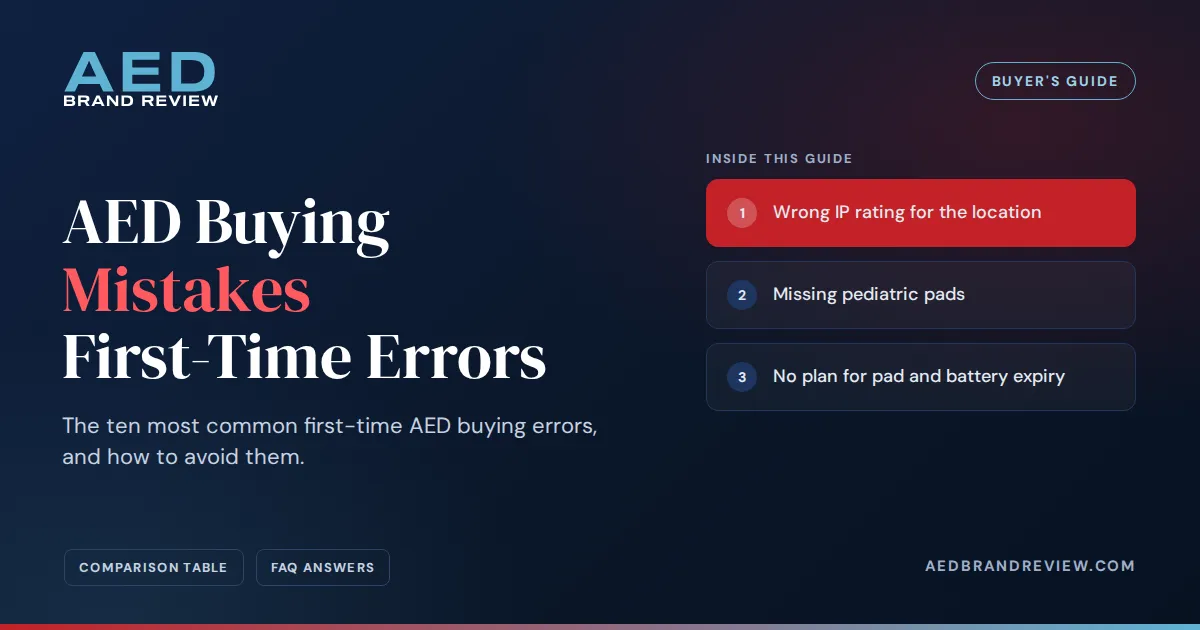
Spend any time auditing field-deployed AED programs and ten mistakes show up over and over, costing organizations several hundred to several thousand dollars in either wrong device, surprise costs, or post-purchase non-compliance. These are the avoidable errors.
Recertified prices across all seven models
Recertified units are the same models under the same FDA premarket approvals, restored, tested and sold with a minimum three year warranty.
| Model | New | Recertified | You keep | Buy |
|---|---|---|---|---|
| Philips HeartStart OnSite | $1,589 | $875 | $714 (45%) | AED Leader or Response Ready |
| Philips HeartStart FRx | $2,099 | $875 | $1,224 (58%) | AED Leader or Response Ready |
| ZOLL AED Plus | $2,082 | $875 | $1,207 (58%) | AED Leader or Response Ready |
| ZOLL AED 3 | $2,399 | $1,150 | $1,249 (52%) | AED Leader or Response Ready |
| HeartSine Samaritan PAD 350P | $1,411 | $875 | $536 (38%) | AED Leader or Response Ready |
| HeartSine Samaritan PAD 450P | $1,761 | $875 | $886 (50%) | AED Leader or Response Ready |
| Cardiac Science Powerheart G5 | $2,157 | $1,225 | $932 (43%) | AED Leader or Response Ready |
Prices verified 30 September 2026 against the public product data of both stores. Both list identical recertified prices, so buy from whichever fits your order size: AED Leader for one to four units, Response Ready for five or more and for compliance and fleet programmes. New prices are the AED Leader list price on the same date.
The honest risk. A recertified AED is a used device. The three year minimum warranty is what makes the saving worth taking. Read recertified versus new and how to choose a refurbished AED before you decide.
Mistake 1, Buying IP21 for outdoor use
Philips OnSite (IP21) is excellent indoors, but IP21 is rated only for dripping water, so it is not suited to exposed outdoor or sideline use. Outdoor and humid environments need IP55+. See our IP rating guide.
Mistake 2, Skipping pediatric pads
“No kids in my office” misses visitor children, family events, and event-day attendees. Pediatric pads expire whether used or not, buy them once, replace once every 2 to 5 years, sleep better.
Mistake 3, Underestimating consumables
A $1,295 device with 2-year pads ends up costing more across 10 years than a $1,795 device with 5-year pads. Model TCO with the Cost Calculator before purchase.
Mistake 4, Ignoring state mandates
Many states require AEDs in K-12 schools, and many also cover fitness facilities and dental sedation offices. Buying without a state-specific compliance check creates real litigation exposure. AED Laws by State.
Mistake 5, Buying counterfeit pads
Online marketplace pads at 50% below MSRP fail at the moment of use. FDA Safety Communications have flagged counterfeits repeatedly. Always buy from manufacturer-authorized resellers.
Mistake 6, Skipping EMS registration
Most states require AED registration with the state DPH or local EMS. Unregistered devices can void Good Samaritan immunity in a handful of states. Register at install, takes 10 minutes. See AED Registration with Local EMS.
Mistake 7, No designated program owner
Without a named owner, expirations get missed, and audits fail. Designate by name at install with a documented backup. See AED Program Management Playbook.
Mistake 8, Wrong cabinet
Unalarmed cabinets get stolen. Outdoor unheated cabinets in cold climates kill batteries every winter. Match cabinet to environment: alarmed indoor, heated outdoor for sub-32°F zones. See AED Mounting, Cabinets & Signage.
Mistake 9, Generic online training without skills check
$15 “instant printable” online CPR certifications aren’t accepted by most state boards or healthcare employers. Use AHA-aligned providers like AED Leader with in-person psychomotor evaluation. See CPR/AED Certification Cost.
Mistake 10, Treating it as a one-time purchase
An AED is the start of a recurring program, pads, battery, training renewal, registration, and drills. Plan an annual budget of ~$200 to $500 per device. Run a monthly inspection cadence.
Buying for a house rather than a workplace? Our AED for home use guide compares the two no-prescription models and what each costs to keep ready for ten years.
Frequently Asked Questions
What’s the most expensive AED mistake?
Buying an IP21 indoor unit for outdoor deployment. The unit fails, replacement costs $875 (recertified) to $2,399 (new), and you’ve lost the original deployment time.
Are counterfeit AED pads actually a real problem?
Yes, FDA has issued repeated Safety Communications warning about counterfeit pads sold through marketplaces. They can fail at the moment of cardiac arrest.
Do I really need to register my AED with EMS?
In most states, yes. Failure can void Good Samaritan immunity in a handful of states. Free, takes 10 minutes.
What’s the right annual budget per AED?
Plan $200 to $500 per device for consumables, training renewal, registration, and inspection. Model in the Cost Calculator.
Can I fix these mistakes after purchase?
Most yes, registration, training, designated owner, cabinet upgrade, and all post-purchase fixes. The wrong-rating device is the only mistake requiring replacement.
Get your team certified the easy way.
Sources & References
Disclaimer: Educational. Verify state-specific compliance separately.